PSA vs BGS vs CGC for Pokemon Cards (2026)
If you’re sending Pokemon cards in for grading in 2026, the choice between PSA, BGS, and CGC is no longer obvious. Each company prices differently, turns around at different speeds, and has a different buyer pool. Here’s the head-to-head.
Already committed to PSA? The separate PSA cost, process, and turnaround guide tracks the direct submission steps and current service availability.
At a glance
| PSA | BGS | CGC | |
|---|---|---|---|
| Top tier | PSA 10 (Gem Mint) | BGS 10 Black Label | CGC Perfect 10 |
| Standard top | PSA 10 | BGS 9.5 Gem Mint | CGC Gem Mint 10 |
| Half-grades | No | Yes | Yes (9.5 only) |
| Sub-grades on slab | No | Yes | No |
| Modern Pokemon comp depth | Deepest | Mid | Growing |
| Vintage comp depth | Deepest | Strong | Mid |
Where each company wins
PSA wins on liquidity. For most Pokemon cards, the PSA comp pool is the deepest — meaning if you grade with PSA you’re entering an established market with predictable resale. PSA 10 is also the slab most casual buyers know to look for.
BGS wins on transparency. Sub-grades are printed on the slab, and the Black Label premium is real. If your card is genuinely flawless, BGS is the only company that can prove it. BGS also has the strongest half-grade ladder.
CGC wins on the Perfect tier. CGC Perfect 10 sits above Pristine, which sits above Gem Mint — three layers of “10” that price differently. For truly flawless modern foils, CGC’s recognition can mean a meaningful premium.
How to actually decide
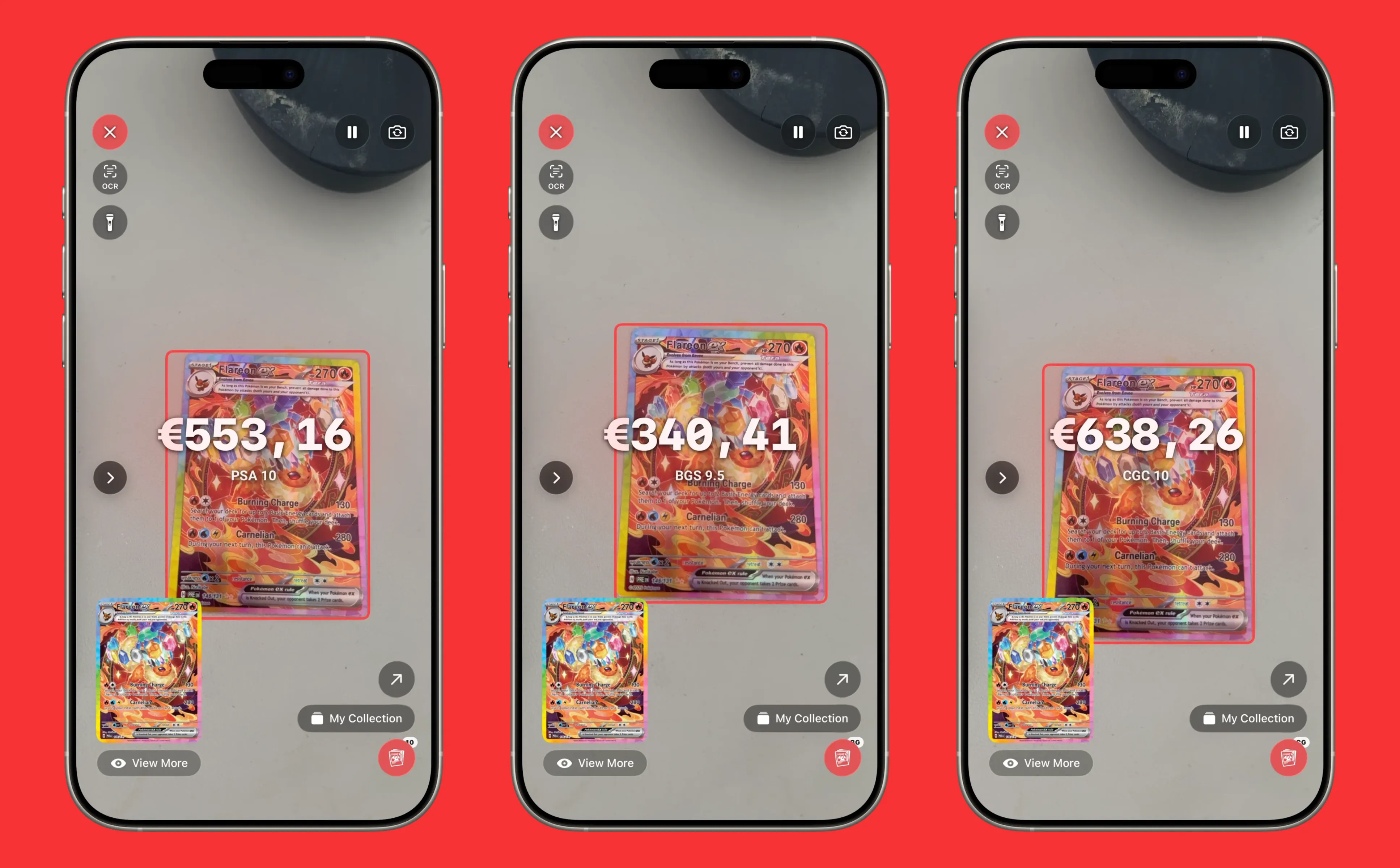
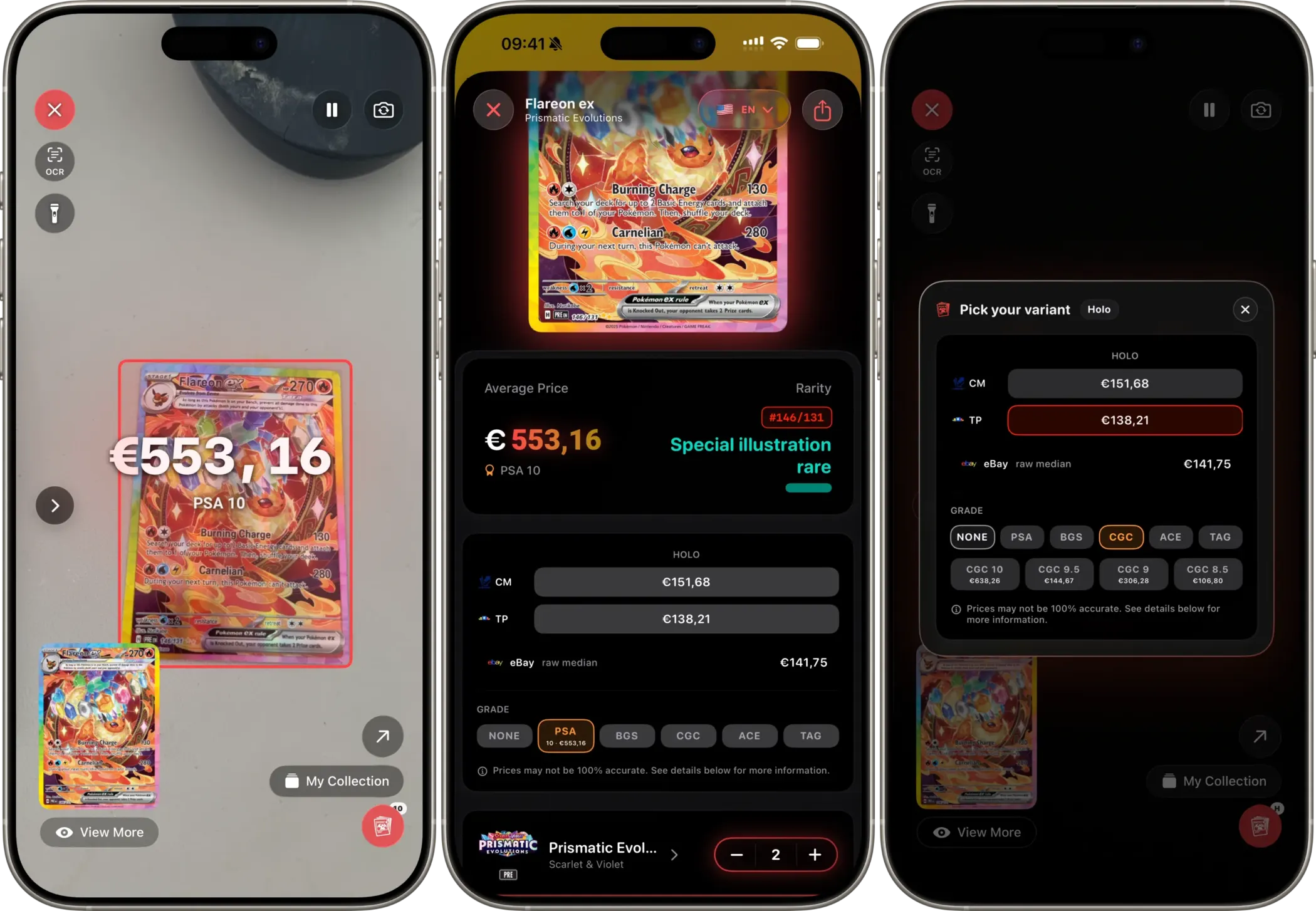
Don’t pick a grader on reputation — pick on the resale spread for your specific card. Eyevo’s matrix shows you live PSA, BGS, CGC, SGC, ACE, and TAG comps for the exact card you’re looking at, side by side. The right answer is usually obvious within ten seconds.
Skip the spreadsheet
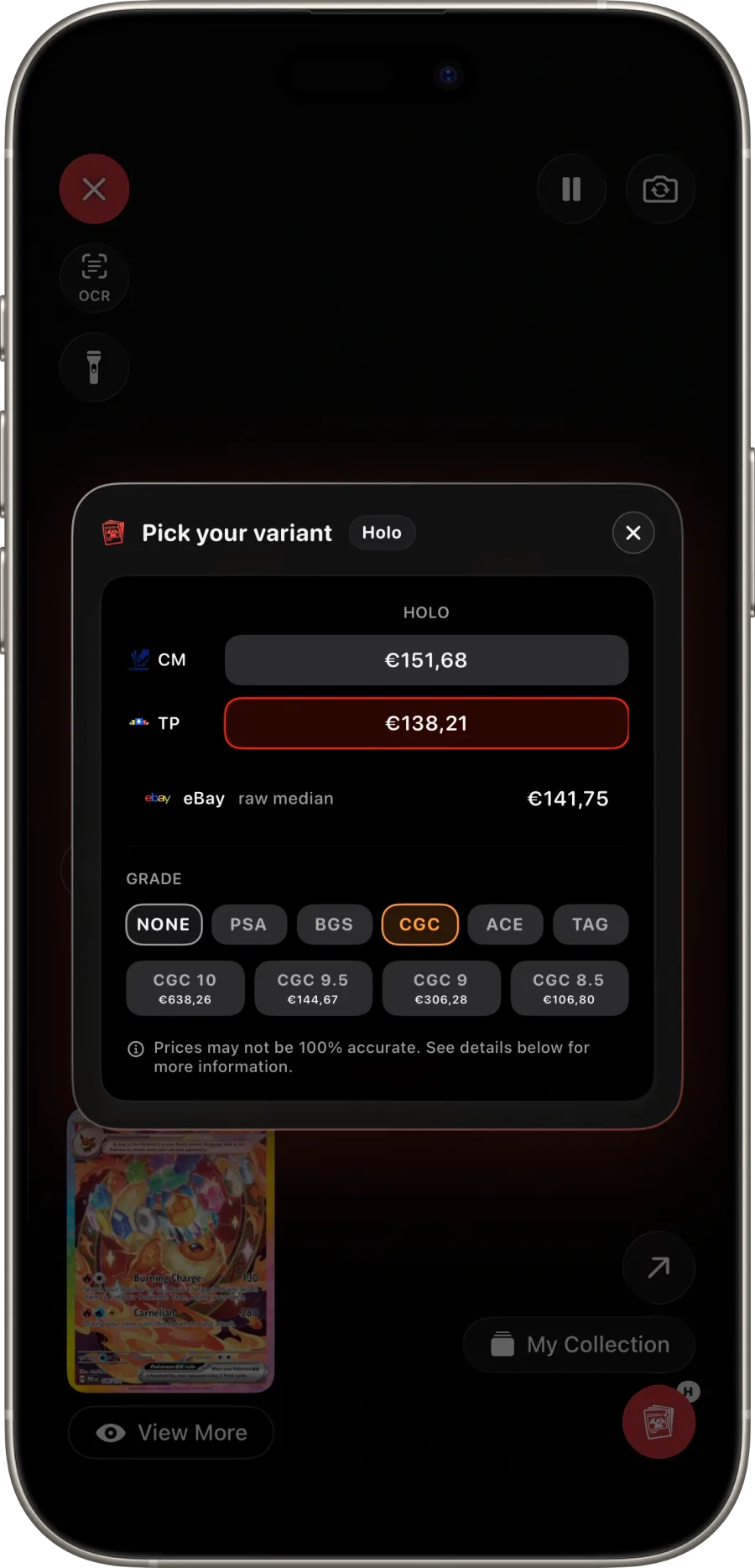
Open any card, tap the grade matrix, switch graders. You see the spread for every company on the same screen — no app-switching, no tab-juggling.
Learn more: Compare all graders
Pokemon TCG Card Scanner Know Exactly What It’s Worth.
Eyevo identifies the exact printing in under a second, then shows live raw, graded, and sold prices. Recognition works offline, and your collection stays on your device.