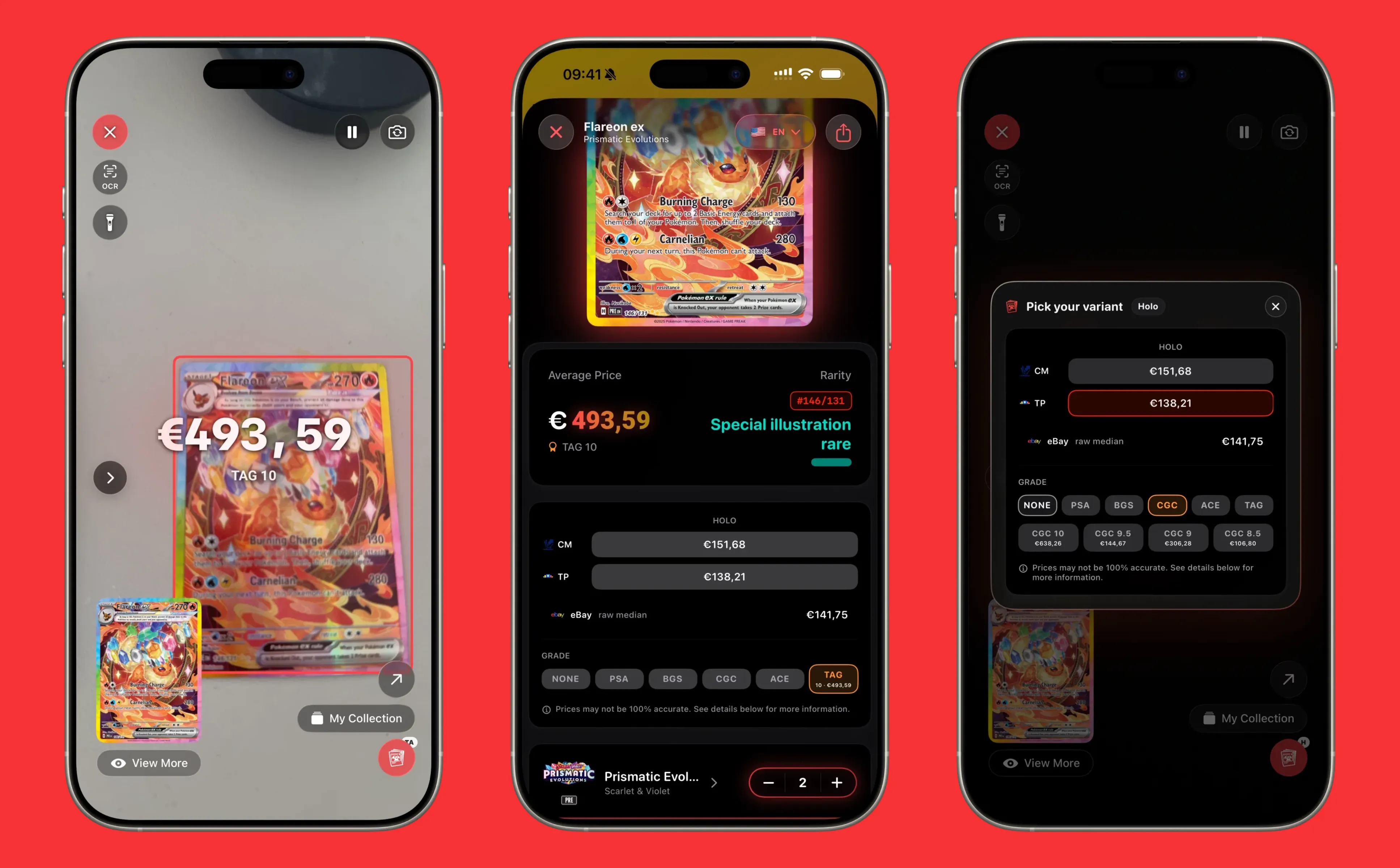
How to Find the Value of Your TAG Pokemon Card (2026)
TAG Grading (The Authority Grading) uses a numeric scale that looks like PSA’s but doesn’t price like it. The TAG 10 premium, the 9.5 spread, the 9 floor — all of them sit on a different curve than what you’d assume from PSA. Here’s how to price your TAG Pokemon card properly in 2026.
The TAG scale, priced from real comps
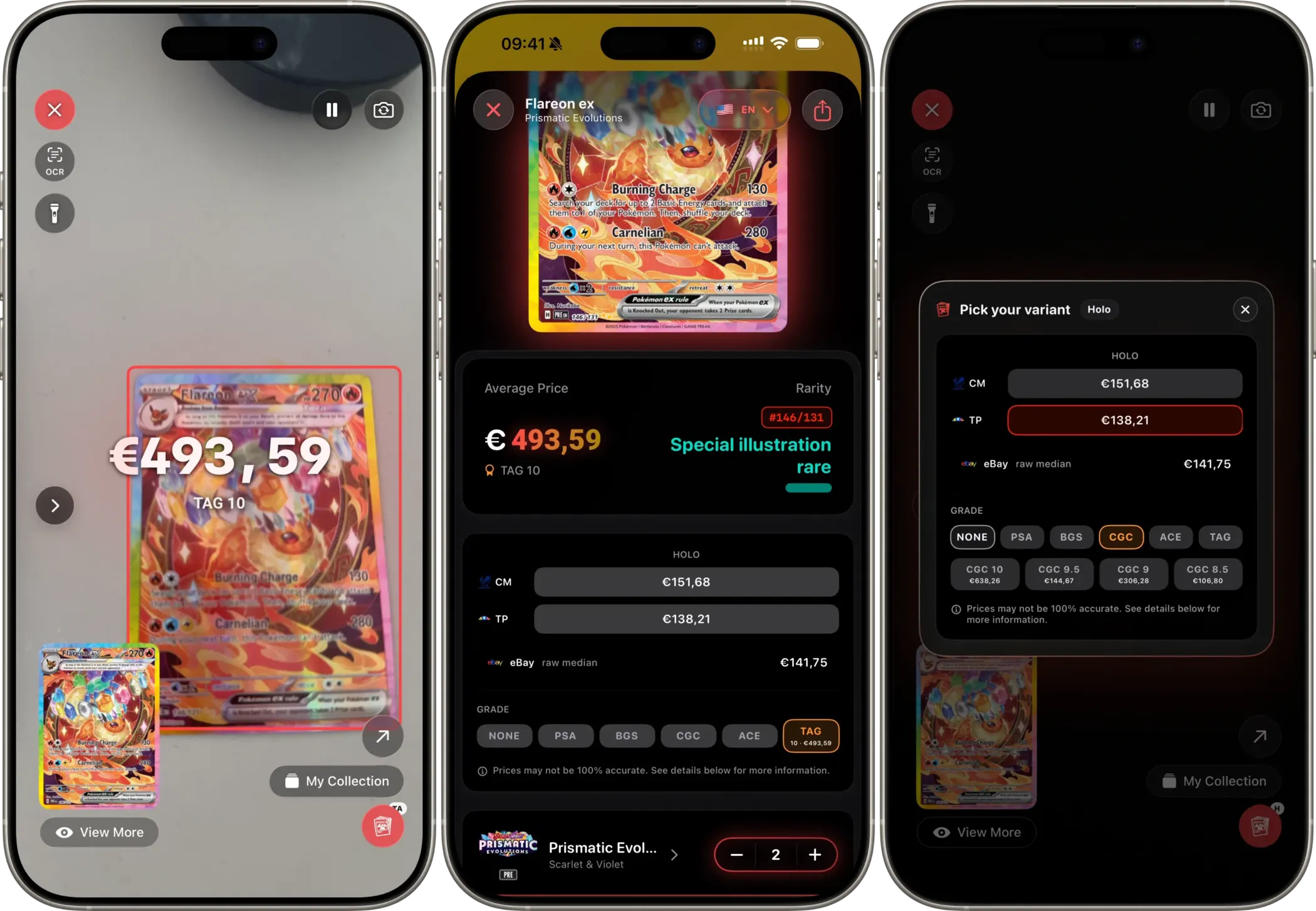
Eyevo tracks each TAG grade individually:
- TAG 10 — top tier. For modern Pokemon, the premium over a TAG 9.5 is often steeper than the PSA 10 vs 9.5 gap.
- TAG 9.5 — the workhorse mid-grade. Where a lot of well-kept raw cards realistically land.
- TAG 9 and below — tracked from real sold listings, never extrapolated.
All numbers come from actual eBay sold listings over the last 30 days, not ask prices.
When TAG is the right call
- Sub-grade detail matters to you. TAG provides robust sub-grade reporting — useful when you want to defend the grade in a sale.
- You like the slab finish. TAG slabs have a distinct look that some collector communities specifically prefer. If your buyer pool is one of those, TAG resale lifts.
- The comp pool exists. As with any newer grader, TAG’s comp depth varies by card. Eyevo will tell you whether you’re entering a real market or a price-discovery one.
Don’t grade with TAG just because the fee is competitive — check the resale comps for your specific card first. The matrix view makes this a 10-second decision.
Scan a TAG slab
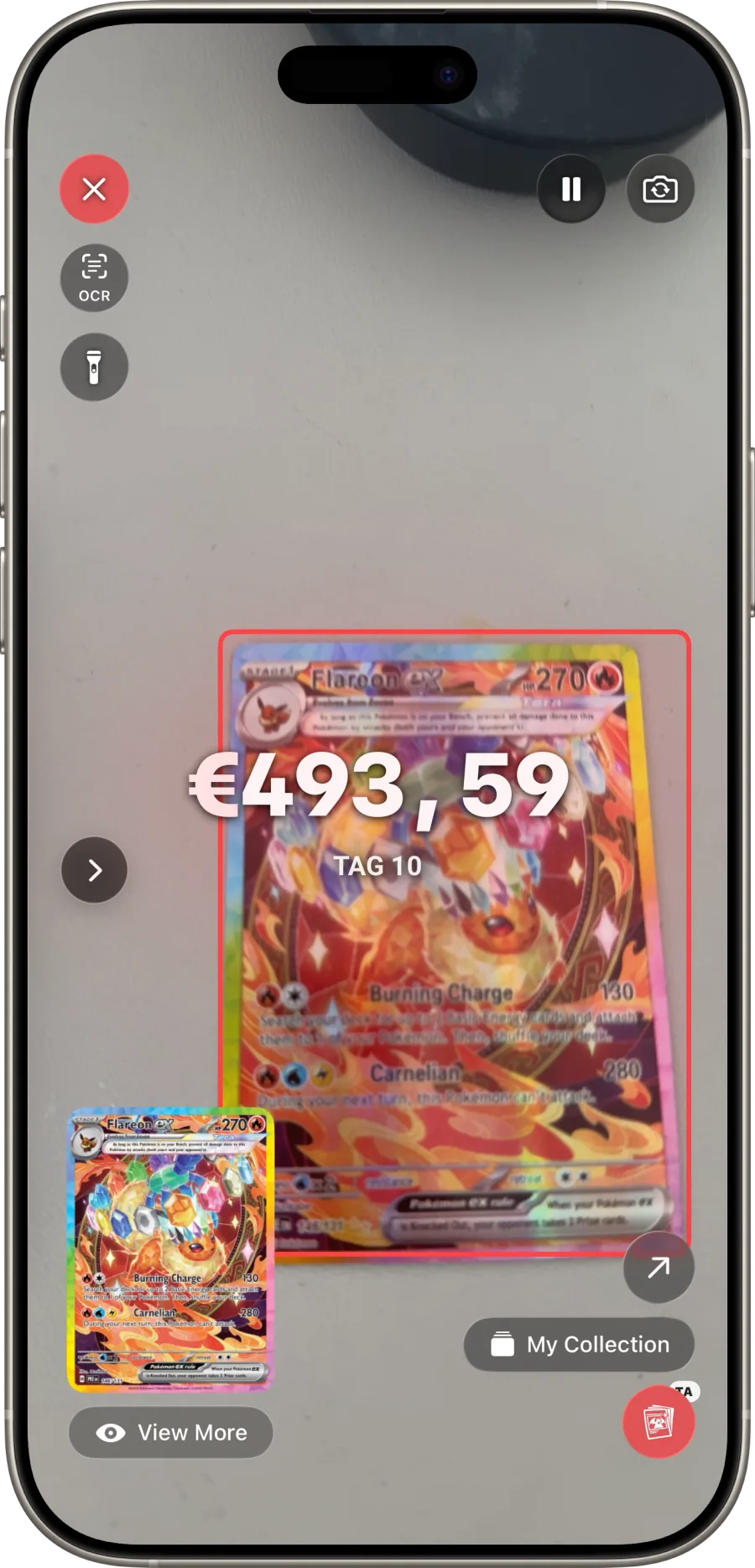
Point the camera at a TAG slab and Eyevo reads the numeric grade automatically — the matching comp lands on screen in seconds.
Learn more: TAG Pokemon Card Pricing · All graders
Pokemon TCG Card Scanner Know Exactly What It’s Worth.
Eyevo identifies the exact printing in under a second, then shows live raw, graded, and sold prices. Recognition works offline, and your collection stays on your device.