Pokemon Card Variants and Pricing Explained
Two Pokemon cards with the same name, the same number, and the same art can have wildly different prices. The difference is the variant — and if your collection tracker treats them as the same card, your portfolio value is wrong.
The variants that actually move price
- Normal (non-holo) — baseline. The reference price.
- Holo rare — the full-art foil. Usually 2–5x normal on modern cards.
- Reverse holo — foil pattern on the whole card except the art box. Modern reverse holos can be 1.5–3x normal.
- 1st edition — vintage only. Often 3–10x unlimited.
- Shadowless — Base Set quirk. A multiplier on top of 1st ed / unlimited.
- PSA graded — any of the above, sealed in a slab. A whole different market.
Why it matters for collection tracking
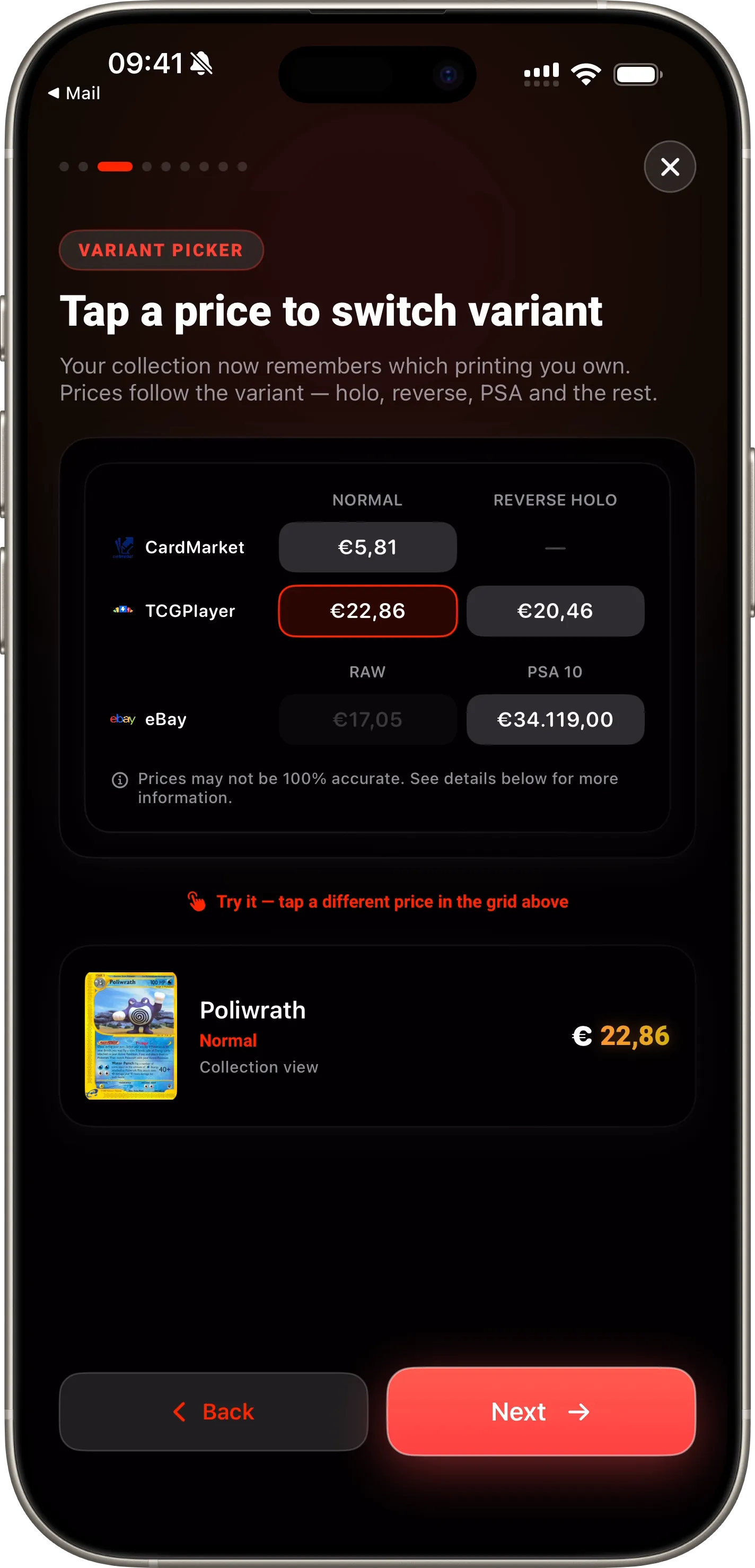
If you own a holo Charizard but your tracker logs it as “Charizard (normal)”, your collection is under-reported by 60–80%. Worse, your sell-price estimate is wrong when it’s time to list.
How Eyevo handles variants
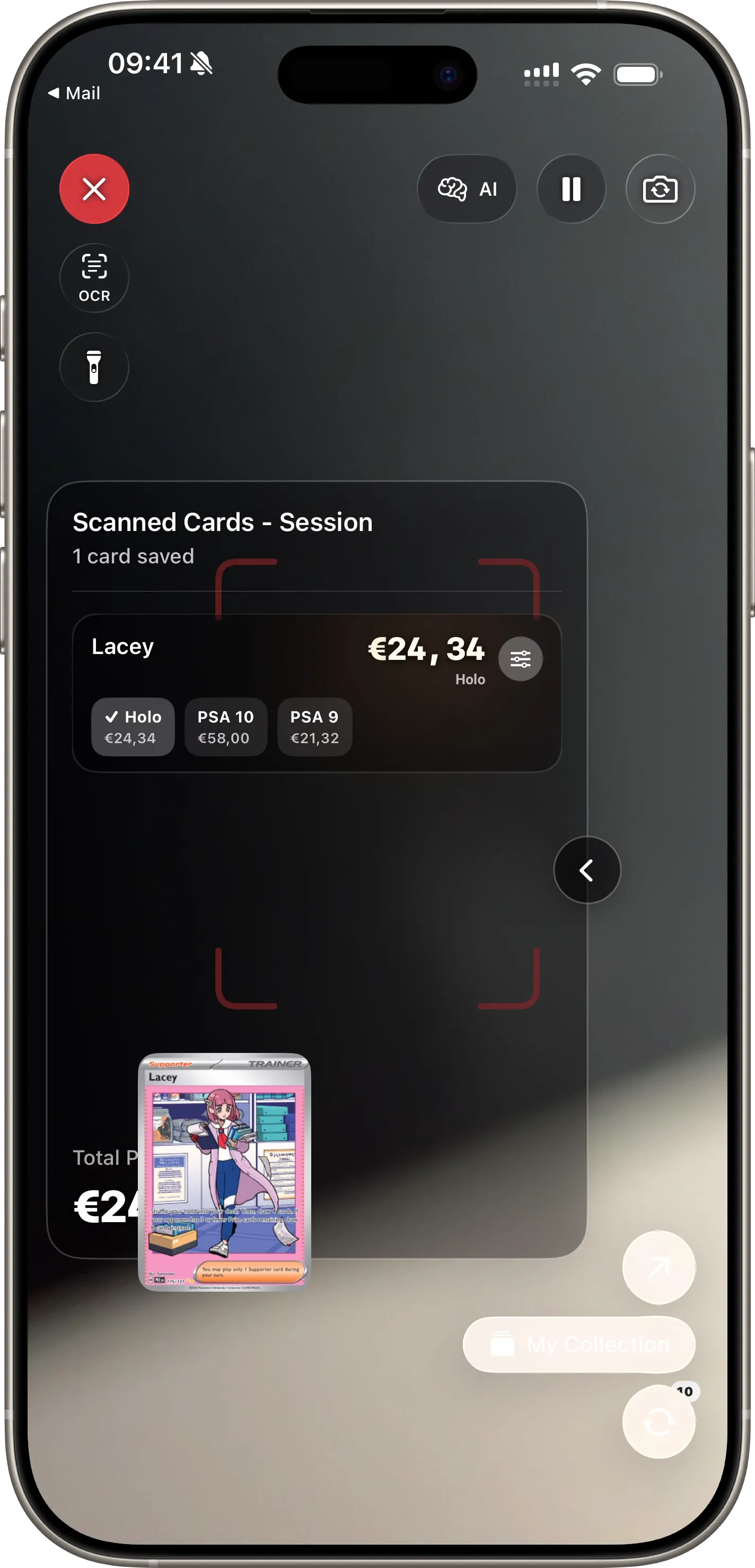
When you scan or add a card in Eyevo, you pick the exact variant you own. Tap any price in the card detail to switch the variant — the price, the AR overlay, and your collection row all update together. Portfolio totals reflect what you actually own.
Quick reference: buying a card
- Check the variant on the listing (seller photos, not the title).
- Look up that specific variant’s recent sold comps.
- Don’t pay holo money for a reverse. Don’t pay reverse money for a normal.
Learn more: Variant-Aware Prices
Ready to scan your cards?
Download Eyevo and identify your Pokemon cards in under a second.
Download on App StoreScan, Identify & Track Your Pokemon Cards
Lightning-fast card recognition powered by AI. Build your collection, track values, and explore the complete Pokemon TCG database.