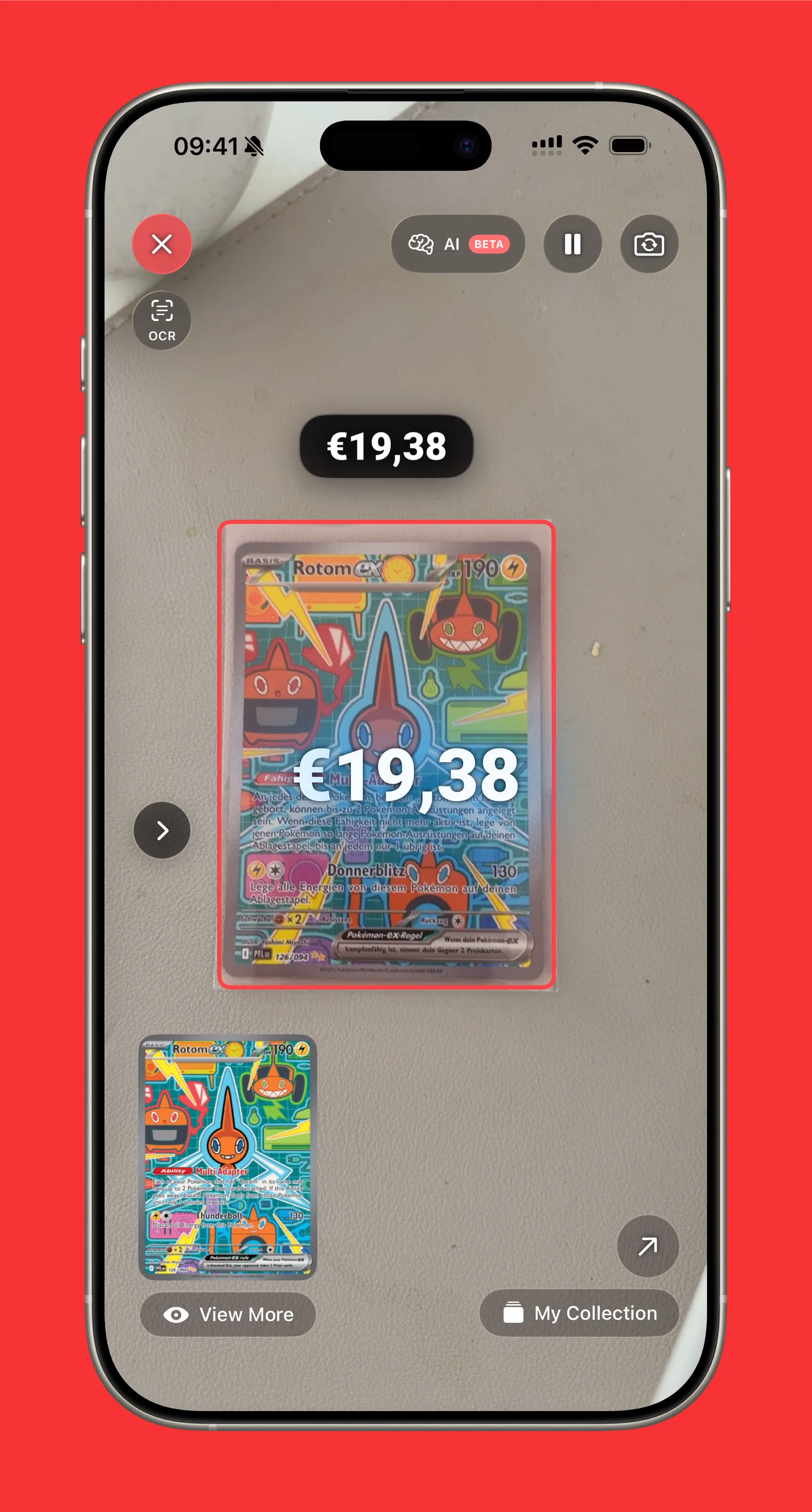
Pokemon Card Identifier: How to Identify Any Pokemon Card in 2026
You found a Pokemon card. Maybe it fell out of a binder you forgot you owned, maybe you opened a pack twenty years ago and stuffed the cards into a shoebox, maybe a kid handed it to you and walked off. You want to know what it is — exact set, exact rarity, exact variant — and you want the answer without spending an hour squinting at symbols.
This is the practical guide to identifying any Pokemon card: what to read off the card body, how to tell variants apart, how to handle weird edge cases, and the fastest way to get the answer (which, full disclosure, is to point a camera at it).
What “identifying” a Pokemon card actually means
A Pokemon card is not just “a Charizard.” A specific Pokemon card is the intersection of:
- Set — which expansion the card was printed in (Base Set, Obsidian Flames, 151, etc.). There are over 197 sets across nearly thirty years of releases.
- Number — its position within the set. “4/102” means card 4 of 102 in that set.
- Rarity — Common, Uncommon, Rare, Holo Rare, Ultra Rare, Secret Rare, Illustration Rare, Special Illustration Rare, Hyper Rare. The rarity symbol sits in the bottom-right corner of the card.
- Variant — regular, reverse holo, Master Ball pattern, Pokeball pattern, 1st edition, unlimited, promo stamp, error print, miscut. Two cards with the same set and number can have wildly different prices because of variant.
- Language — English, German, French, Spanish, Japanese, and others. The same card in two languages is two different cards in pricing terms.
- Condition — Near Mint, Lightly Played, Moderately Played, Heavily Played, Damaged. For graded cards: PSA, BGS, CGC, SGC, ACE, or TAG with a numeric grade.
Identification is the process of nailing all six of those down. Most casual identifications stop at “Charizard, Base Set.” That is enough to know it might be valuable. It is not enough to know which Charizard it is.
The five things to read off a Pokemon card body
Modern Pokemon cards (anything printed since the early 2000s) print everything you need to identify them in a small block at the bottom of the card. Older cards (Wizards of the Coast era, 1998–2003) hide some of this in different places — covered separately below.
🎲A modern card with all the markers visible
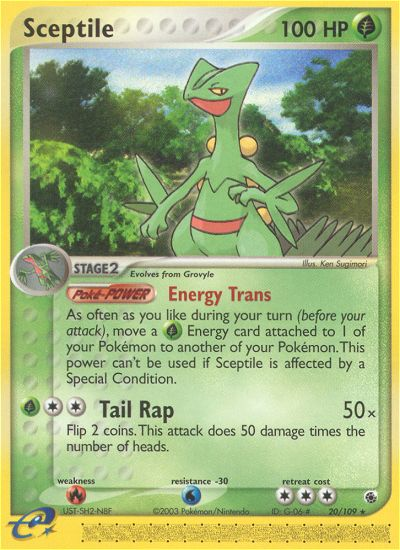
Sceptile
Ruby & Sapphire • #20
Rarity:Rare
Market Price
$7.72
HP
100
Artist
Ken Sugimori
1. The set symbol
The set symbol sits in the bottom-right of the card, next to the rarity symbol. Each Pokemon set has a unique symbol — Obsidian Flames uses a stylized flame, 151 uses the number 151, Sword & Shield’s base set uses a sword-and-shield crest. If you cannot recognize the symbol on sight, that is fine; the card identifier app does it for you, but if you want to do it manually, search “[symbol description] pokemon set symbol” and the answer is one image-search away.
A handful of older sets (the original Base Set, Jungle, Fossil) shipped with no set symbol on the cards themselves — the absence of a symbol is itself the marker. This is also why a “no rarity symbol” Base Set card is a different print run than a regular Base Set card: the very first print run shipped without rarity symbols at all.
2. The card number
The number is printed in the bottom-right corner, formatted as current / total (e.g., 4/102 means card 4 of 102 cards in the set). Promotional cards use a different format — typically SWSH123 or SVP022 rather than a fraction — and these “promo” numbers identify which promo block the card came from.
For Special Illustration Rares, Hyper Rares, and other “secret rares,” the card number can be higher than the set’s printed total. A card numbered 199/198 in a 198-card set is a secret rare — a deliberate signal that the card is part of an extended print pool.
3. The rarity symbol
The rarity symbol is one of the simplest visual identifiers on the card:
- Black circle (●) = Common
- Black diamond (◆) = Uncommon
- Black star (★) = Rare
- Holographic black star = Holo Rare
- Holographic gold star, multiple stars, or special icon = Ultra Rare / Special Illustration Rare / Hyper Rare
Each set adds its own twist — Scarlet & Violet uses a regulation mark (the letter F, G, or H) alongside the rarity, and some sets introduce new icons for new rarity tiers. The headline rule remains: more visually elaborate the symbol, rarer the card.
4. The copyright line
The copyright line at the very bottom of the card lists the year and the publisher. “©2023 Pokémon” places the card in the 2023 print pool; “©1999 Wizards” identifies a Wizards-era card. This is a reliable way to anchor a card’s era when set identification is ambiguous.
The copyright line also distinguishes 1st Edition Wizards prints (which carry an extra “1st EDITION” stamp on the left of the card art) from unlimited prints. The price difference between 1st Edition and unlimited can run into multiple multipliers for the same Pokemon.
5. The illustrator credit
The illustrator name is printed below the card art on most cards — “Illus. Mitsuhiro Arita,” “Illus. 5ban Graphics,” and so on. For collectors who chase a specific artist (Mitsuhiro Arita’s Charizards command a premium across reprints), this is the deciding line. For everyone else, it is a useful tiebreaker when two variants of the same card use different art.
How to tell variants apart
Variants are where most casual identifications go wrong. The same Pokemon at the same set number can exist in five or more variants, each with its own price.
Reverse holo vs regular holo
The regular print of a card has the holographic effect on the artwork only (or nowhere, if it is a common). The reverse holo has the foil treatment on the body of the card — the area outside the artwork. Reverse holos are generally worth two to five times the regular print of common and uncommon cards, less for rares.
You can tell them apart by tilting the card under a light: regular holo cards shimmer in the artwork; reverse holos shimmer in the borders, name plate, and HP block.
Master Ball, Pokeball, and other pattern reprints
Recent sets (151, Black Bolt, White Flare, the Destined Rivals pattern run) introduced full-set pattern reprints where every card in the set gets a Master Ball or Pokeball pattern variant overlaid on the holographic foil. These are pulled from a separate booster slot at lower rates than the standard reverse holo, and trade at a corresponding premium.
The patterns are subtle — small Pokeball or Master Ball icons tile across the card body — and easy to miss if you are not looking for them. Checking for a pattern variant is one of the most common reasons to pull up a card identifier on a phone.
Promo stamps and event prints
Pokemon prints special “stamped” versions of cards for tournaments, prerelease events, league seasons, and retail-store promotions. The stamp is a small icon — a pikachu silhouette, a cosmos symbol, an event date — placed on the artwork or in the corner. Stamped cards are functionally distinct prints with their own prices, often well above the regular release.
1st Edition vs Unlimited (Wizards era)
For cards printed by Wizards of the Coast (Base Set through Skyridge), the difference between 1st Edition and Unlimited is one of the most consequential variant splits in the hobby. The 1st Edition stamp is a small “Edition 1” icon to the left of the card art. If it is there, the card is from the very first print run; if it is not, the card is from a later (much larger) reprint pool.
A 1st Edition Base Set Charizard in PSA 10 trades at a multiple of the corresponding Unlimited print. The two cards look nearly identical at a glance — the stamp is the only meaningful difference.
Shadowless vs Shadowed (also Wizards era)
A shorter window of Base Set printing produced “shadowless” cards — the artwork frame on these cards lacks the drop-shadow that later prints added. Shadowless prints sit between 1st Edition and Unlimited in scarcity and price. The cleanest way to identify a shadowless card is to compare the right edge of the artwork frame: if it is flat, the card is shadowless; if there is a gray drop-shadow, it is the standard print.
The fastest way to identify a card: scan it
All of the above is the manual route. It works, and it is what every collector falls back on for the trickiest edge cases. But it is slow, and it requires you to know what you are looking for.
The fastest path is to point a camera at the card and let an AI-powered Pokemon card identifier app do the work. Eyevo uses on-device AI to identify cards in under a second — it matches the artwork against a database of over 22,000 Pokemon cards across 197+ sets, distinguishes variants automatically, and reads graded slabs as well as raw cards. Everything runs on the phone, so it works without an internet connection.
The advantage is not just speed. The scanner identifies the specific variant — Master Ball vs Pokeball vs regular — without you having to know what the patterns look like or which sets issued them. It also surfaces the current market value (TCGPlayer, CardMarket, and eBay sold listing comps) on the same screen as the identification, so you go from “what is this?” to “what is it worth?” in one tap.
Ready to scan your cards?
Download Eyevo and identify your Pokemon cards in under a second.
Edge cases that trip up most identifiers
Promo cards with non-standard layouts
Pokemon prints hundreds of promotional cards each year — Black Star Promos, Trainer Gallery alternates, Stamped tournament prints, league-season exclusives, retail-bundle inclusions. Many of these print in non-standard layouts (different rarity symbols, no set number, additional stamps).
For these, the set name on the card body and the copyright year are the most reliable manual identifiers. A scanner-based identifier handles them by visual match.
Error prints and miscuts
Error prints — cards printed with the wrong color, missing ink, or off-center — are collectible in their own right, and identification is twofold: identify the underlying card first, then verify the error against known error databases. PWCC, PSA’s pop report, and a handful of dedicated error-print communities maintain inventories.
A miscut card (where the printing crossed the cutting line and you can see fragments of the adjacent card on the edge) is a different kind of error and usually trades at a premium when the miscut is significant.
Counterfeits and fakes
Fakes are an entire topic — the short version is that counterfeit Pokemon cards have circulated since the late 1990s and the modern fakes are getting harder to spot. Telltale signs include slightly off colors, blurry text, the wrong cardstock thickness (real Pokemon cards have a specific rigidity), and a “rip test” where genuine cards reveal a thin black core when torn at the corner (do not actually tear a card you suspect is real).
For deeper coverage, the dedicated guide to spotting fake Pokemon cards is the better reference. Identification apps that anchor on visual signatures will often flag suspected fakes when the visual match falls below threshold.
Common questions
How do I identify a Pokemon card by picture?
The fastest way is a Pokemon card identifier app that runs on the phone’s camera. Eyevo, for example, identifies any Pokemon card from the camera in under a second, returning the set, number, rarity, variant, and current market price. Manual identification by picture (uploading a photo to a search engine, posting in a Discord) works but is slower and less precise on variants.
What does the symbol in the corner of a Pokemon card mean?
The symbol in the bottom-right corner is the rarity marker. A circle is Common, a diamond is Uncommon, a star is Rare, and various holographic stars or special icons indicate Ultra Rare, Illustration Rare, Special Illustration Rare, and Hyper Rare. The set symbol sits next to it and identifies which expansion the card came from.
How do I tell if my Pokemon card is rare?
Look at the symbol in the bottom-right corner. A black circle or diamond is a low-value common or uncommon. A black star is a base rare. A holographic star, gold star, or set-specific special symbol indicates one of the rarer tiers (Holo Rare through Hyper Rare). Card number higher than the set’s printed total is a secret rare. Older cards (Wizards era) follow similar conventions but with simpler symbol set.
What is a reverse holo Pokemon card?
A reverse holo is a print variant where the holographic foil treatment is applied to the body of the card (border, name plate, HP block) instead of, or in addition to, the artwork. Reverse holos are pulled from a different booster slot than regular cards and trade at a premium — typically two to five times the regular print of common and uncommon cards.
Are Pokemon cards numbered the same as their set position?
Yes for the base print run. The number on the card body (e.g., 4/102) gives the card’s position in the set’s ordered list. Cards numbered higher than the set total (e.g., 199/198) are secret rares — bonus cards beyond the printed set list. Promo cards use a different numbering format altogether (SWSH123, SVP022) that identifies the promo block instead of a set position.
How can I tell if my Pokemon card is from 1st Edition?
For Wizards-era cards (Base Set through Skyridge, 1999–2003), look for a small “Edition 1” stamp printed to the left of the card art. If it is there, the card is from the 1st Edition print run. If it is not, the card is from a later (Unlimited) run. The 1st Edition stamp is the most consequential single variant marker in Pokemon — the price gap between 1st Edition and Unlimited prints can run into multiple multipliers for the same card.
What is the regulation mark on Scarlet & Violet cards?
The regulation mark is a small letter (currently F, G, or H) printed near the bottom of cards from the Scarlet & Violet era. It identifies which competitive-format rotation the card belongs to. Tournament players use it to determine whether a card is legal in the current Standard format; collectors usually ignore it but it is useful as a print-era anchor.
What to do once you have identified a card
Once you know exactly which card you have — set, number, rarity, variant — the next questions are typically:
- What is it worth? Cross-check TCGPlayer market price, CardMarket trend, and recent eBay sold listings. A scanner-based identifier shows all three on the same screen.
- Is it worth grading? Only specific cards in specific conditions justify the grading fee. The dedicated PSA grading guide covers the math.
- Is it worth selling now or holding? The price history chart for the card answers this. A card on a steep upward trend has different selling dynamics than one that has been sliding for two months.
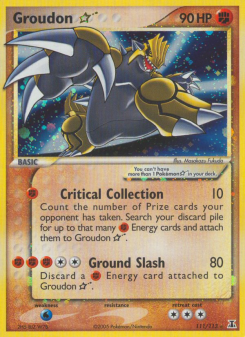
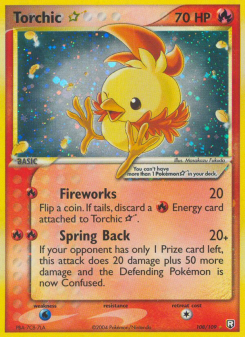
🏆 Most Valuable Cards
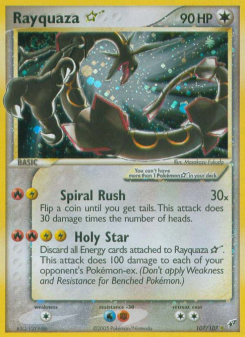
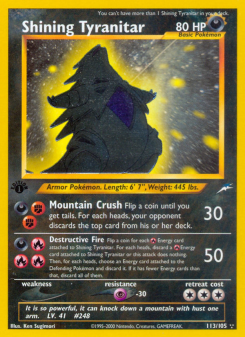

If the card you found is high-value, the move is usually to scan it, sleeve it, store it in a top-loader or binder away from sunlight, and decide whether to sell, hold, or grade. If it is a common reverse holo from a set you do not collect, the move is usually to throw it in a bulk box and forget about it.
Either way, the identification step is the prerequisite — you cannot decide what to do with a card you cannot name precisely. Eyevo exists to make that step take one second instead of an hour.
Ready to scan your cards?
Download Eyevo and identify your Pokemon cards in under a second.
Scan, Identify & Track Your Pokemon Cards
Lightning-fast card recognition powered by AI. Build your collection, track values, and explore the complete Pokemon TCG database.