

See every market move

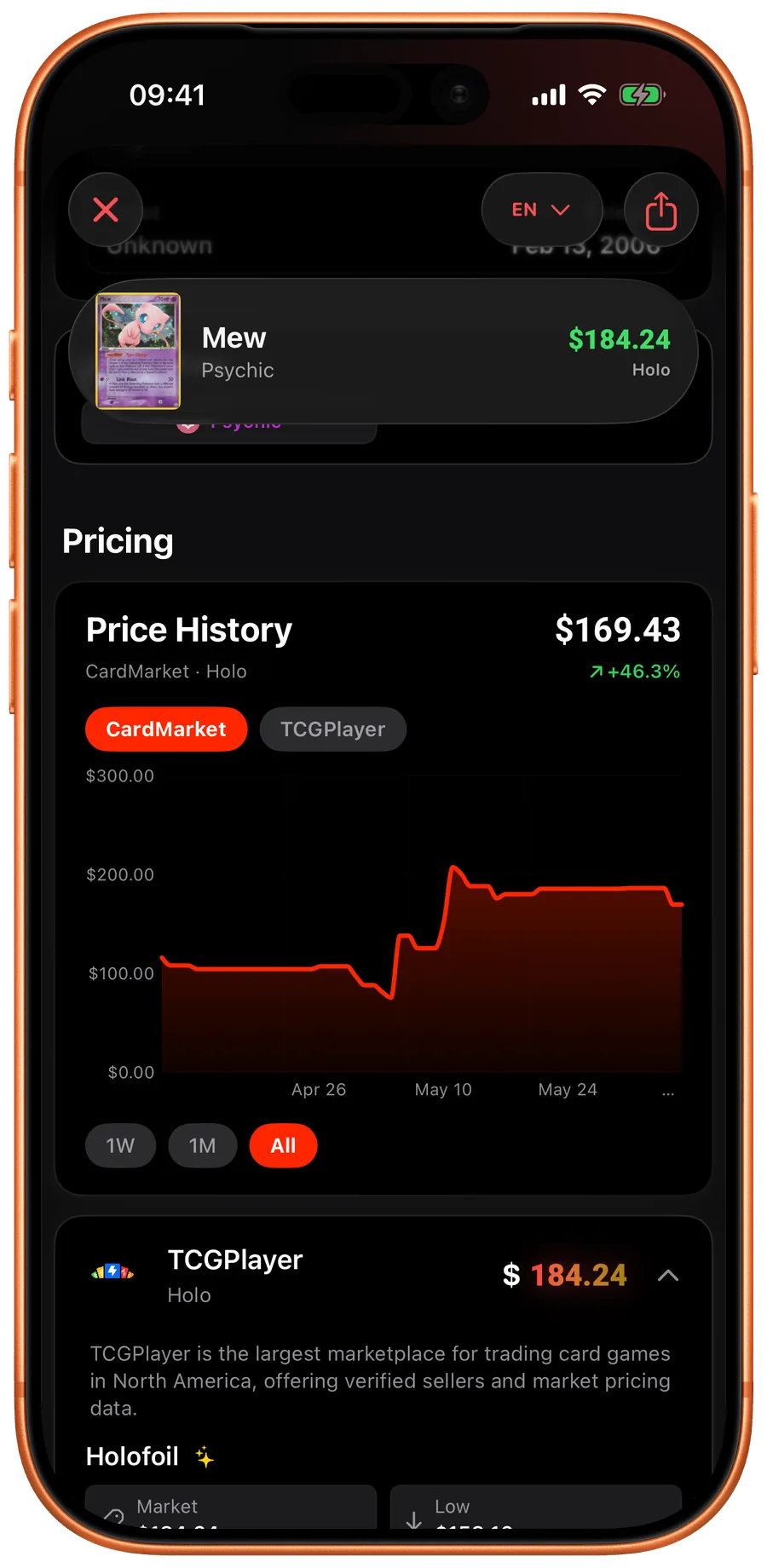
Open any card for a 30-day trend on both CardMarket and TCGPlayer — with ranges from one week out to all time.

Price History Feature Preview

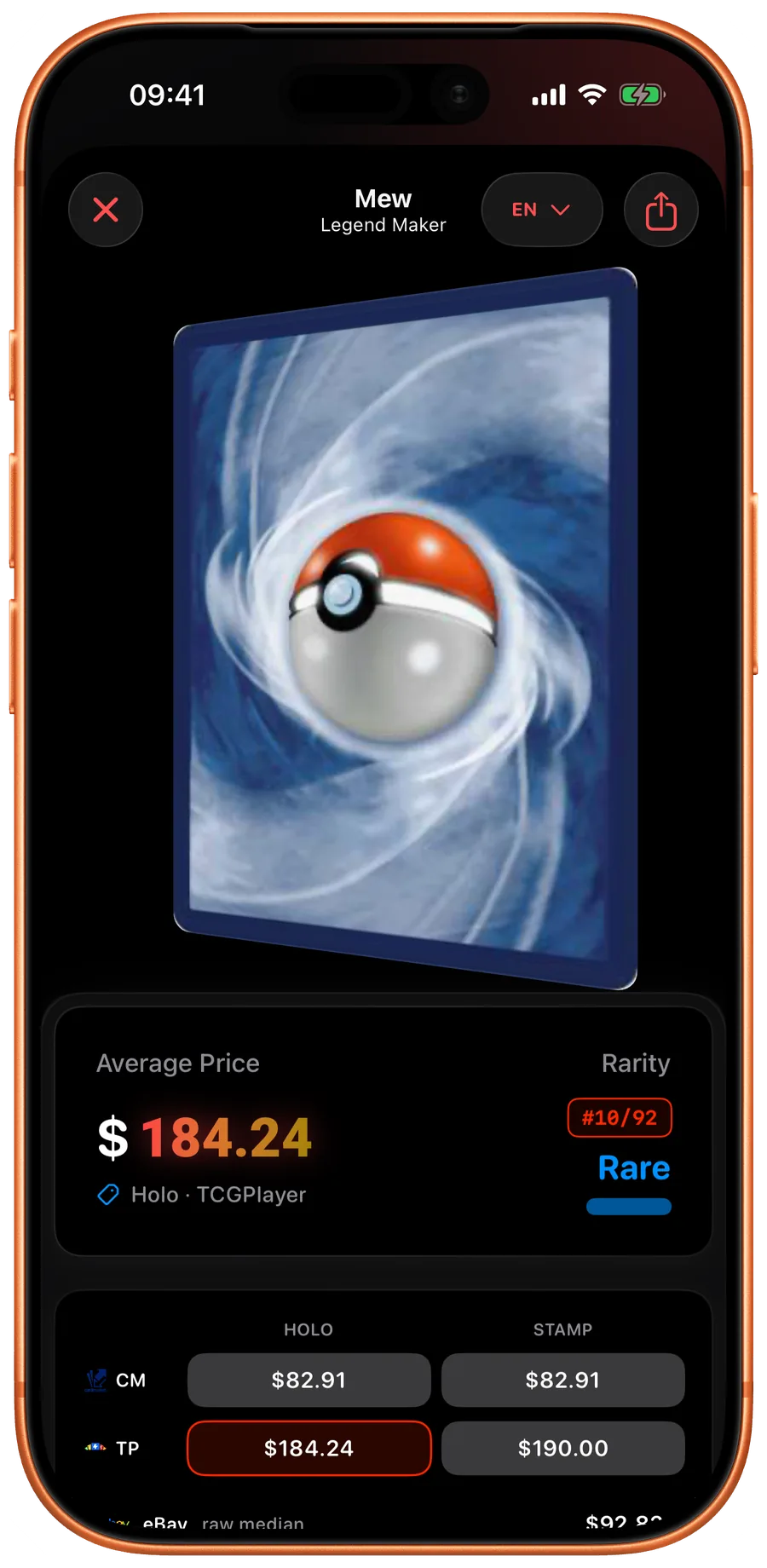
Both marketplaces, one chart

Flip between CardMarket and TCGPlayer without leaving the card. Timezones, currencies, and decimals handled for you.

Week, month, year, or all time

Zoom into a spike with 1W, or pull back to see a card's full multi-year trajectory.

Scrub to the exact day

Tap and hold the chart to read the price on any specific day — perfect for tracking buys and sells.

Every card detail page shows a price history chart going back several months. The chart is built from the same daily price feed as the rest of the app, so you can tell at a glance whether the card you are looking at has been trending up, sliding, holding flat, or recovering from a dip.

Reading the chart

The chart plots the market price (TCGPlayer market or CardMarket trend, depending on currency) over the selected window. Hovering or tapping any point shows the exact price on that day. The default window is 90 days; you can switch to 30, 180, or 365.

Major events — set release dates, reprint announcements, tournament-driven spikes — are not annotated automatically, but most patterns become recognizable once you have looked at a handful of charts. Reprint announcements typically show a sharp drop a few days before fulfillment; tournament play causes brief spikes around regional and international events.

Use it before you list

The most common use of the price history chart is sanity-checking a listing price. If you are about to put a card on eBay or TCGPlayer, glance at the chart first — a card that has dropped 20% in the last 30 days should not be listed at the 60-day-ago number, and a card that has spiked 30% in two weeks should not be listed at last quarter's price either.

Collectors holding cards for the long term use the same chart to decide whether to grade. A card whose raw price has been climbing steadily often supports a grading premium; a card that has been sliding usually does not.