Reverse Holo vs Regular Holo: What's the Difference?
Both reverse holos and regular holos have that shiny, reflective surface — but they’re completely different cards with different values. Here’s what you need to know.
The Basic Difference
Regular Holo (Holofoil): The holographic pattern appears on the artwork only. The card border, text, and everything else is non-reflective.
Reverse Holo: The holographic pattern appears on everything except the artwork. The border, text box, and background shimmer, while the artwork stays flat.
It’s counterintuitive — the “reverse” holo has holo on more of the card, but the artwork itself isn’t holographic.
How to Identify Each Type
Regular Holo
- Artwork shimmers and reflects light
- Border and text are flat/matte
- Usually higher rarity (star symbol)
- More valuable in vintage sets
Reverse Holo
- Artwork is flat/matte
- Border and background shimmer
- Can be any rarity (common, uncommon, rare)
- One per pack in modern sets
Which Is Worth More?
It depends on the era and card.
Modern Sets (2003-Present)
For most modern cards, regular holos are worth more than reverse holos of the same card:
- Regular holos appear less frequently
- Many collectors prefer the classic holo look
- Reverse holos are guaranteed one per pack
Exception: Some collectors specifically collect reverse holo “master sets” which drives up demand for certain reverse holos.
Vintage Sets (1999-2002)
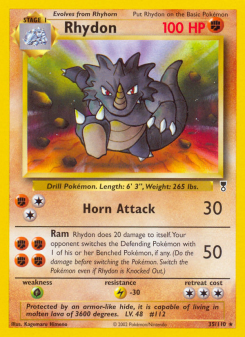
Early sets didn’t have reverse holos. When reverse holos were introduced (Legendary Collection, 2002), they became chase cards:
- Legendary Collection reverse holos have a unique “galaxy” pattern
- These vintage reverse holos can be worth more than regular versions
- The pattern style matters — later sets have different reverse holo patterns






Reverse Holo Patterns by Era
Not all reverse holos look the same. The pattern changed over the years:
Legendary Collection (2002)
Galaxy/cosmos pattern — highly collectible
EX Era (2003-2007)
Various patterns including swirl and dot patterns
Diamond & Pearl Era (2007-2011)
Vertical line pattern
HeartGold SoulSilver (2010-2011)
Subtle shattered glass pattern
Black & White Era (2011-2013)
Mirror-like reflection
XY Era (2014-2016)
Diagonal lines pattern
Sun & Moon Era (2017-2019)
Sunburst/radial pattern
Sword & Shield Era (2020-2023)
Sparkle/glitter effect
Scarlet & Violet Era (2023-Present)
Refined sparkle pattern
Pull Rates
Understanding pull rates helps explain value:
Regular Holos:
- About 1 in 3 packs in modern sets
- Higher rarity = lower pull rate
Reverse Holos:
- Guaranteed 1 per pack in modern sets
- Can be any card in the set (common through rare)
Since every pack has a reverse holo, they’re inherently more common than holo rares.
Collecting Strategies
For Binder Collectors
Many collectors like using reverse holos to fill their binders because:
- The shimmer makes pages visually interesting
- Easier to complete reverse holo sets than holo sets
- Often cheaper than chasing all the regular holos
For Value Hunters
If you’re collecting for value:
- Prioritize regular holos over reverse holos
- Exception: vintage reverse holos (Legendary Collection)
- Check prices — some reverse holos surprise you
For Master Set Completion
A “master set” includes every version of every card:
- All regular holos
- All reverse holos
- All variants
Reverse holos are required for master set completion, which creates consistent demand.
Quick Identification Tips
When looking at a card:
- Tilt it under light — watch what reflects
- Check the artwork — if artwork shimmers, it’s regular holo
- Check the border — if border shimmers, it’s reverse holo
- Look at rarity symbol — reverse holos exist at all rarities
Price Comparison Example
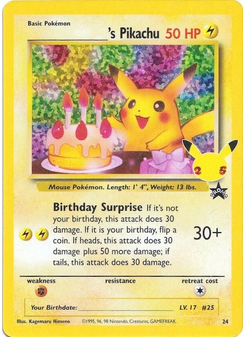
Here’s a typical price difference between versions. Scan any card with Eyevo to see all variant prices:
Common Confusion
”Isn’t reverse holo better since more of the card is shiny?”
More shimmer ≠ more value. The market values regular holos higher for most modern cards because they’re harder to pull.
”My reverse holo looks different than my friend’s”
Reverse holo patterns vary by era. A Sword & Shield reverse holo looks completely different from an EX era reverse holo.
”Is holo foil the same as holographic?”
Yes. Holo, holofoil, and holographic all refer to the same reflective pattern.
Summary
- Regular Holo = shiny artwork, flat border
- Reverse Holo = flat artwork, shiny everything else
- Regular holos are usually worth more (modern sets)
- Vintage reverse holos (Legendary Collection) can be valuable
- Every modern pack has one reverse holo
- The pattern changes by era
When checking card values, always verify which version you have. A reverse holo and regular holo of the same card can have very different prices.
Want to quickly identify which version you have? Download Eyevo and scan your card — it shows prices for all variants.
Scan, Identify & Track Your Pokemon Cards
Lightning-fast card recognition powered by AI. Build your collection, track values, and explore the complete Pokemon TCG database.